
Campus Map
Please select a building to learn more
The Mary Jenkins House
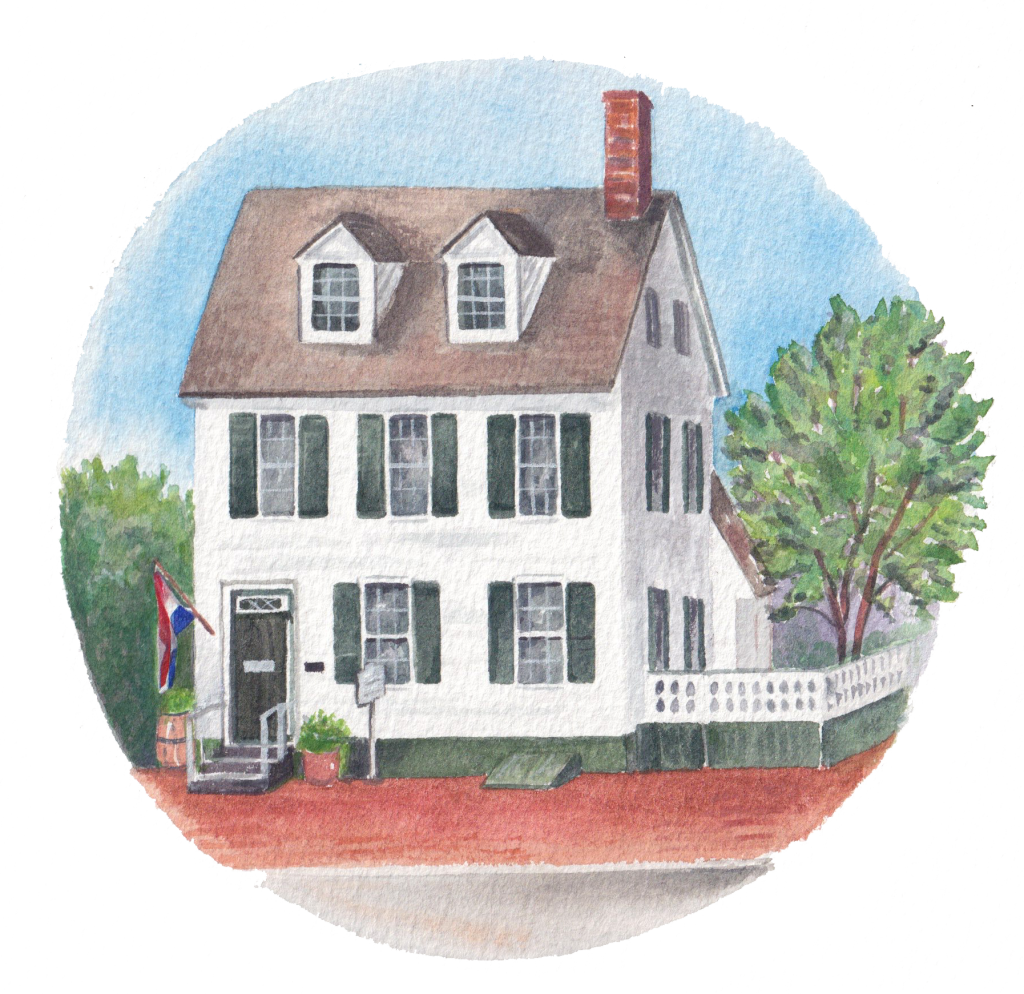
The Mary Jenkins House displays THS's permanent exhibit, which provides an overview of Talbot County's culture and economy. The exhibits, "Living on Land and Water" and "Voices of the African American Experience," tell their story.
About the Mary Jenkins House
The Mary Jenkins House dates back to at least 1783 and is believed to be the oldest frame house in Easton, older than the Easton Courthouse. The two-and-a-half story building features pre-revolutionary Georgian characteristics, including mantels accented by crossettes.
Dr. Edward Jenkins purchased the house in 1859 for his wife, Elizabeth Dawson Jenkins, and their family. Their daughter, Mary Jenkins (1862-1947), lived there her entire life.
Learn more about Mary Jenkins and the Women's Suffrage Movement in Talbot County by clicking here.
The James Neall House
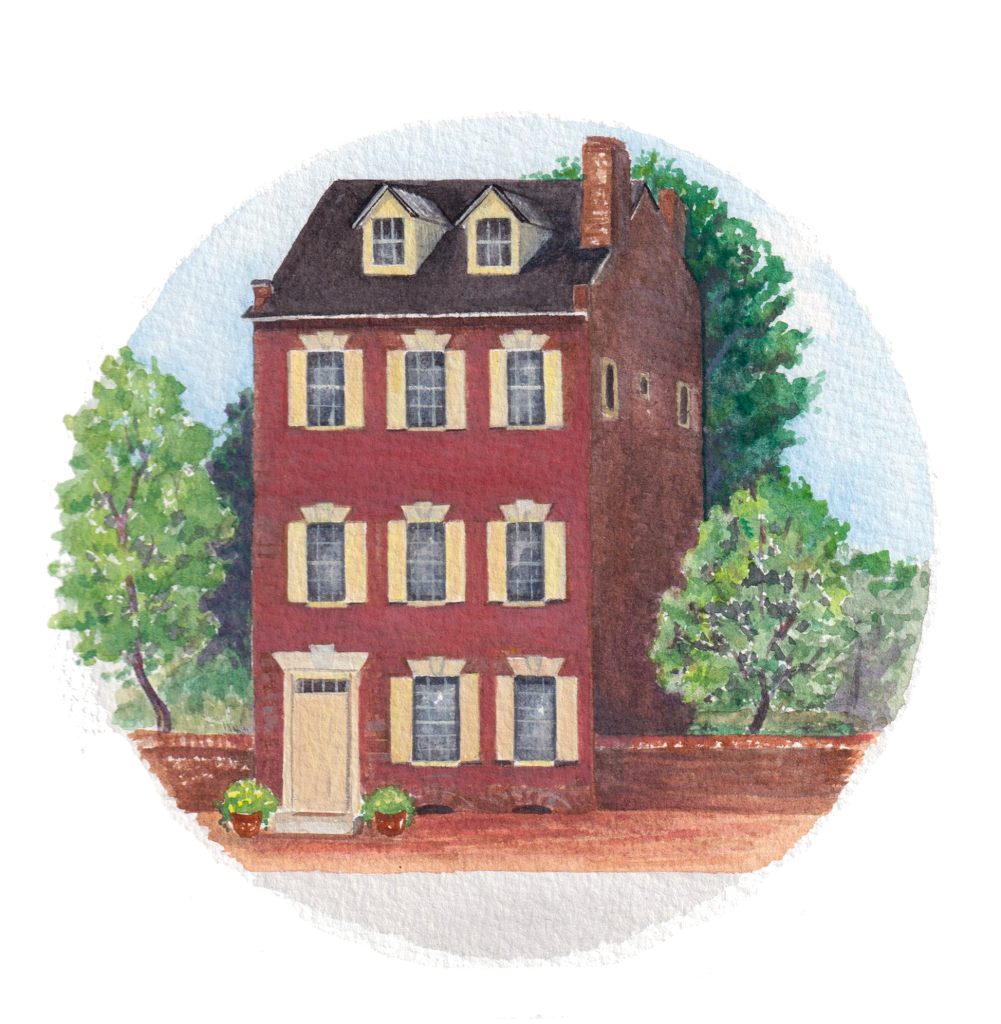
Architecture
The Neall House is a strong example of Federal architecture, known for its balance, simplicity, and understated elegance. Popular in the United States from about 1780 to 1840, it developed after the American Revolution and marked a shift away from earlier European-influenced designs. Building on the earlier Georgian style, it reflects a more refined look that aligned with the values and identity of the young nation.
James Neall
The Neall House was constructed between 1804 and 1810 by James Neall, a Quaker from Easton and a skilled cabinetmaker. Neall married Rachel Cox in 1801, and they had 12 children. He designed the house to meet his family's needs, display his social standing in the community, and reflect his Quaker principles. The Neall family was part of the Third Haven Meeting.
James Neall learned his craft working for his older brother Joseph and took over the cabinetmaking business from him. Joseph Neall, who was nineteen years older than James, started the business in 1795 but sadly died in 1800 at age forty-four.
Evidence of James Neall's success as a cabinet maker is demonstrated by the achievements of two of his apprentices. One, John Needles, eventually moved to Baltimore and became one of Maryland's leading furnituremakers. His work is currently displayed in the Baltimore Museum of Art. Another apprentice, Samuel Wainwright, after completing his apprenticeship, opened a cabinetmaking shop in Easton with his brother. A tall-case clock, originally owned by the Tilghman family and now held by Talbot Historical Society, was made in this shop.
The Larry Denton Extended Museum and the Catherine Valliant Hill Research Center
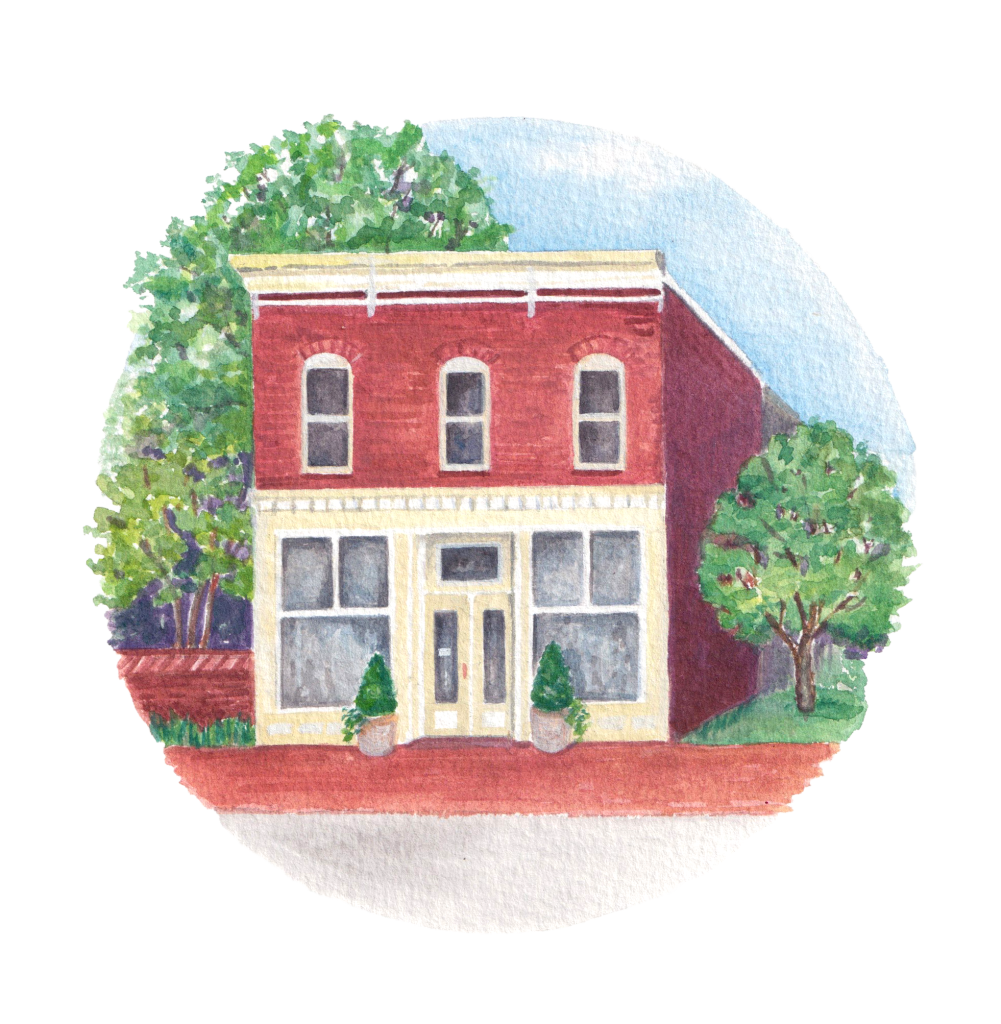
Larry Denton Museum
The original front portion of this historic building, dating to the 1880s, now forms the heart of the Larry Denton Museum. Once part of a modest structure that has since been expanded, this space serves multiple purposes and remains central to the Historical Society’s daily operations.
Named in honor of Larry Denton, the museum recognizes his remarkable leadership and lasting commitment to preserving local history. Mr. Denton served as President of the Board of Directors and as Executive Director for a number of years. His passion for history was infectious, and those who spoke with him quickly discovered his enthusiasm and depth of knowledge. He frequently lectured and presented selections from the Society’s historic photograph collection to local groups and organizations, inspiring a wider appreciation for the region’s past. In addition to his work with the Society, Mr. Denton authored several books that documented and celebrated local history.
Over the years, the Historical Society has used this space for a variety of purposes, including exhibition galleries and the Tharpe Antiques consignment shop. Today, the area has been thoughtfully reimagined to house rotating exhibits, offices, and the Society’s research center, continuing its long tradition as a place where the community can connect with its history.
Catherine Valliant Hill Research Center
The Catherine Valliant Hill Research Center is named in recognition of Cathy Hill’s extraordinary dedication to historical research and preservation. Through countless hours of work and generous financial support, Mrs. Hill has played an important role in advancing the Society’s mission to safeguard and share local history.
Mrs. Hill has a particular passion for the Society’s historic photograph collection. She has been a strong advocate for preserving the original negatives, print and slides, ensuring they are carefully digitized, helping to expand and protect the Society’s growing digital archive. Her commitment has greatly enhanced both the accessibility and long term preservation of these invaluable visual records of the community’s past.
Together, the Larry Denton Museum and the Catherine Valliant Hill Research Center serve as a hub for exhibitions, research, and discovery, inviting visitors, scholars, and community members alike to explore and preserve the rich history of the region.
"Ending of Controversie"
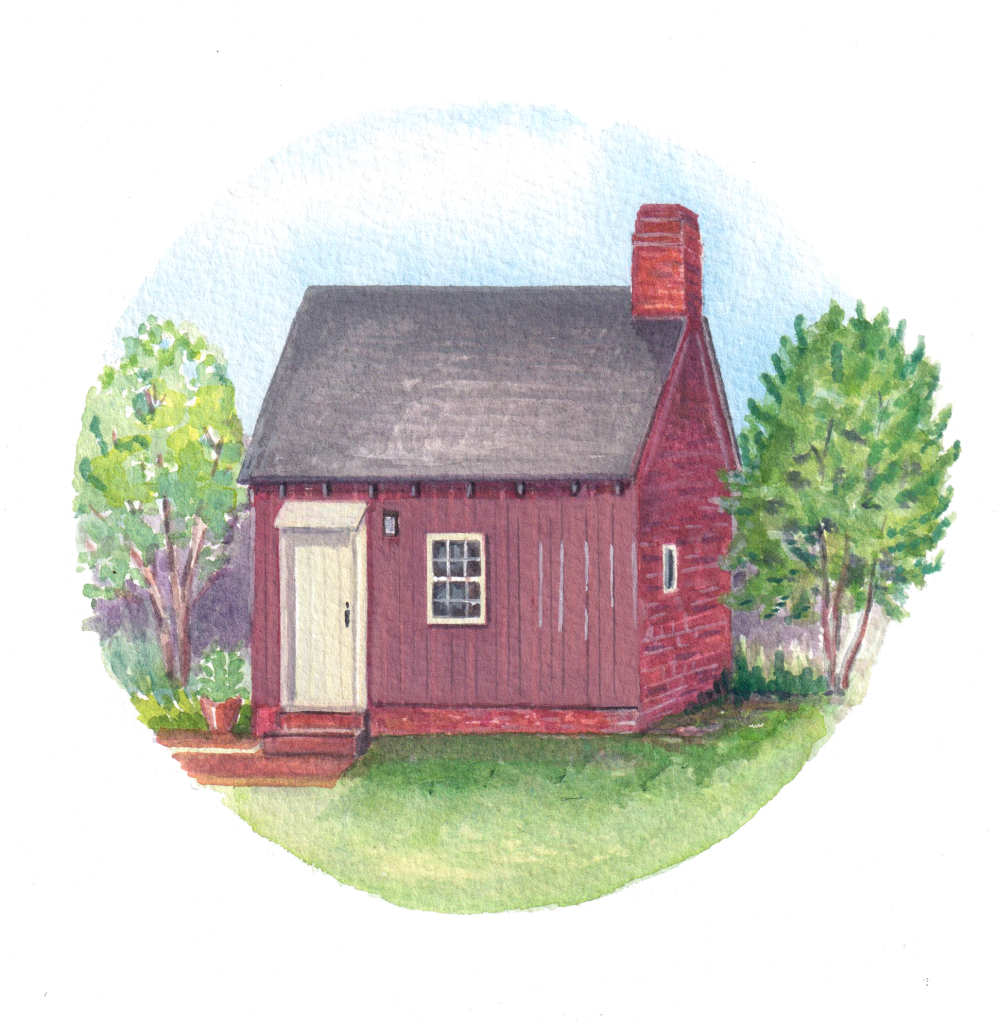
H. Chandlee Foreman Studio
A Reconstructed 17th-Century Early Settler’s Home
Set in the Garden on its north perimeter
Closed while under repair.
Ending of Controversie is a reconstructed 17th-century Early Settler’s home associated with Wenlock Christison, an early advocate for religious freedom in colonial America. The original dwelling was built around 1670 in Talbot County.
A member of the Religious Society of Friends, commonly known as Quakers, Christison had previously faced persecution in Boston, where he was sentenced to death in 1660 for returning after banishment because of his faith. Refusing to renounce his beliefs, he became a symbol of resistance to religious intolerance. Public opposition eventually led to his reprieve, and the law targeting Quakers was repealed. He later emigrating to Maryland, settling just outside of Easton in Talbot County, where he lived on the land called “Ending of Controversie”, given to him as a gift from his friend Dr. Peter Sharpe. Though the land was already named, it aptly reflected both the end of his personal trials and the hope for peaceful religious coexistence.
The present structure is a historically informed reconstruction built in 1970 by architect H. Chandlee Foreman in his backyard on S. Aurora Street in Easton. He used it as his studio and museum space. When Foreman rediscovered this building in 1935 on the property west of Easton on Villa Road, he described it as a “dilapidated ruin on the brink of complete destruction, uncared for and unknown.” Thus began his journey to actually measure, photograph and document this building. The house is one and half stories in height with a steeply pitched gable roof and built of brick using the English bond pattern. It is architecturally notable for its representation of a period of Talbot County’s history preceding the founding of the town of Easton.
Today, the Ending of Controversie stands as both an example of early colonial architecture and a tribute to the enduring struggle for religious liberty in early America.
Learn more about Wenlock Christison:
No. 18 S. West Street
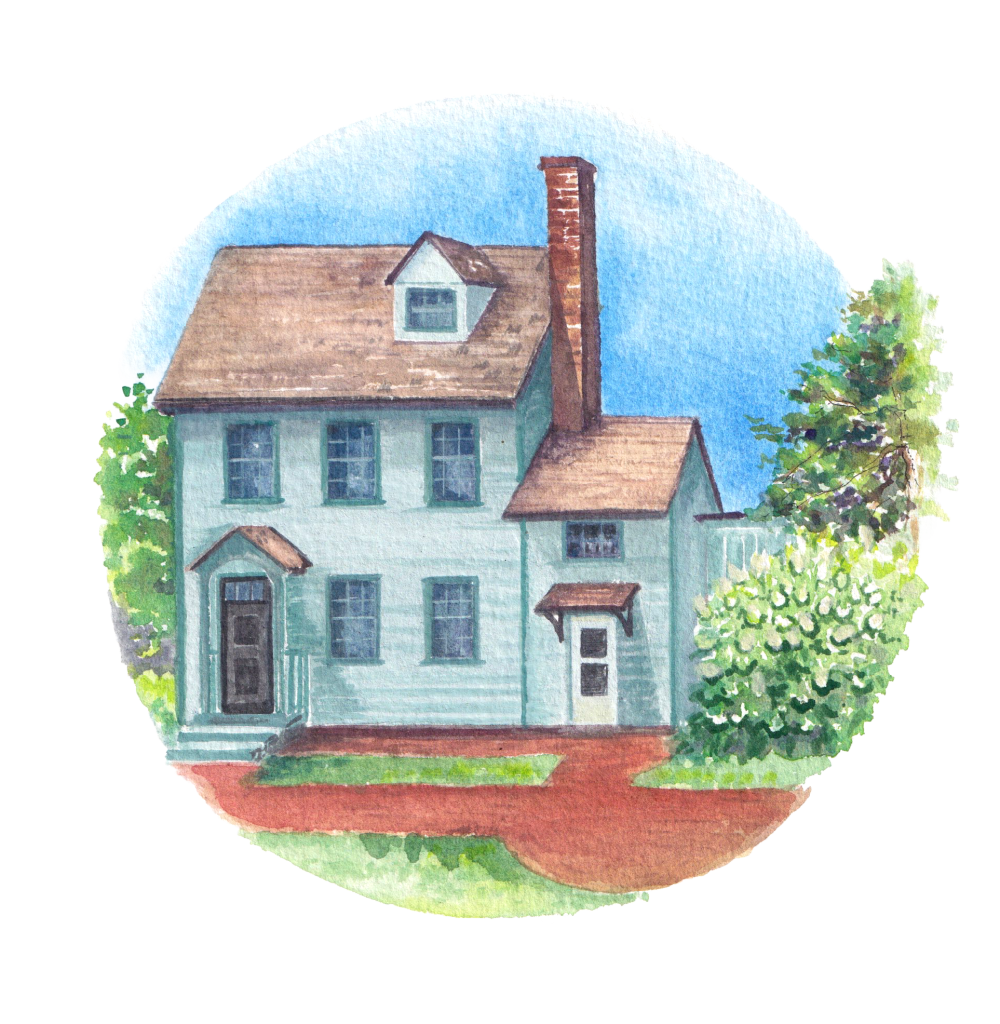
Not open to the public
18 West Street typifies a house from the early 19th century. An earlier building was a one-and-a-half story structure measuring 18 by 24 feet with six windows, owned by Philemon Willis (1764-1836) at the time of the 1798 tax assessment. It was believed to face West Street. There was no information about when it was expanded into the current simple, yet carefully framed Federal-style two-and-a-half story house.
The property was purchased by the Talbot Historical Society in 1961 and restores between 1973 and 1976 as part of the Historical Society's Bicentennial project. The project architect was James Wollen and the contractor was Alvin Walbridge.
Joseph's Cottage
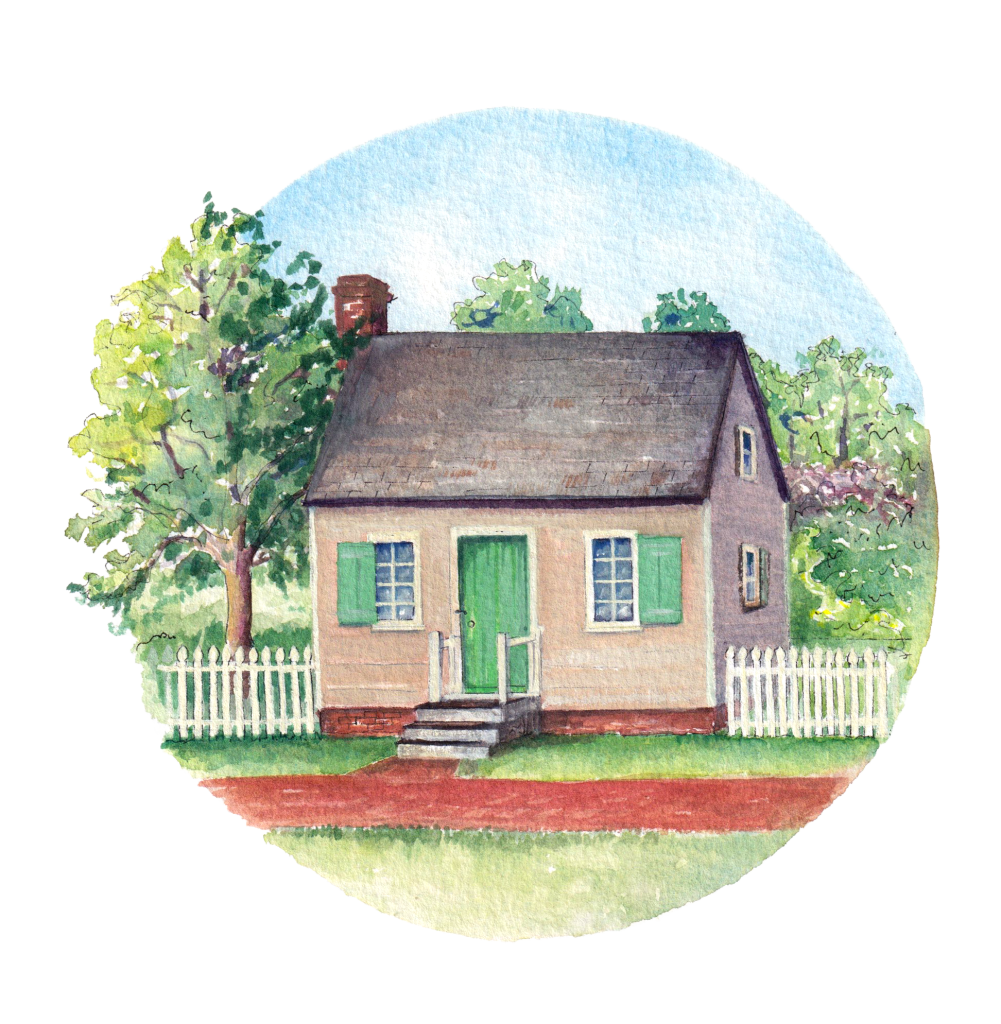
Enter from the west end of the Garden.
Closed while under repair. We hope to reopen in 2026
Joseph Neall, the eldest of eight children born to Quaker, Solomon Neall, started his cabinet-making business in 1795, with three apprentices. In 1797, he leased lot #116 in Easton on Washington and Cabinet Street (currently Glenwood Avenue).
In a short time, his business gained some prominence. Among the names of customers listed in the Court's records are some of the most notable families in Talbot County: Dickson, Dickinson, Trippe, Goldsborough, Hollyday, Tilghman, and Lloyd.
Joseph died in 1800 at the age of just forty-four after returning from the quarterly meeting of the Society of Friends. His will, dated October 1, 1800, was witnessed by two fellow Quakers, Jno. Jenkinson and Dr. Robert Morris. Joseph's brothers Francis and James, were named as executors.
In his will, he bequeathed to his brother James "All my right, title, and interest of the lot on which I now dwell, along with all the improvements thereon and belonging thereto." Additionally, he left "all my working tools and materials for carrying on the cabinet and joiner business." Joseph had established James in that business. The bequest was valued at $1,649.
THS Gardens
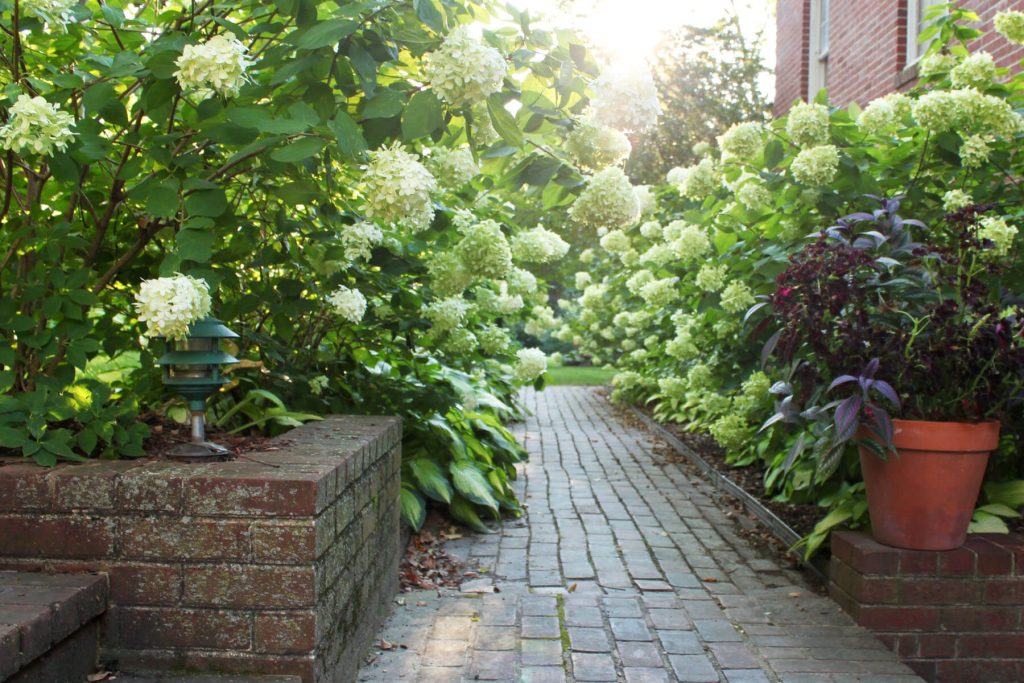
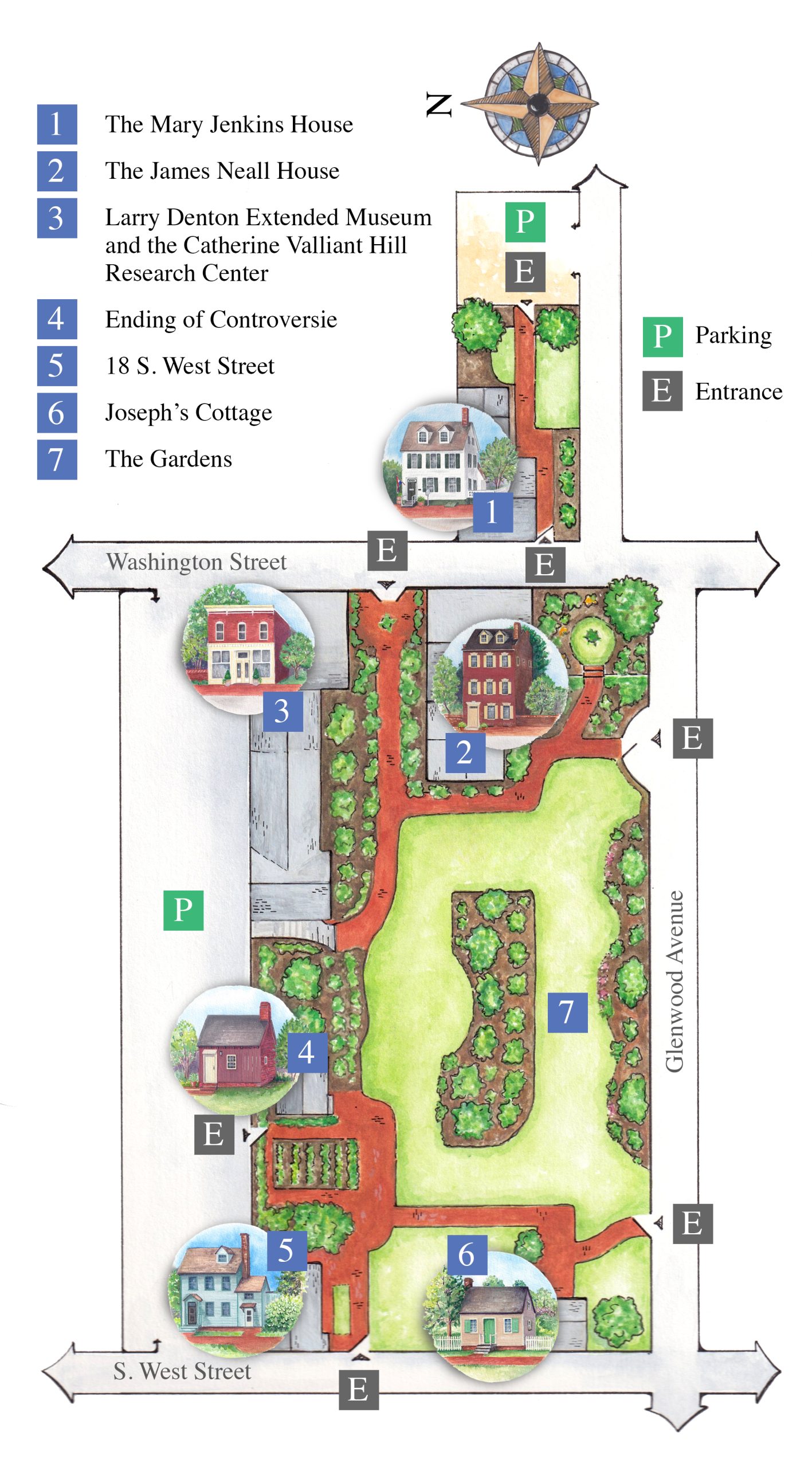
The gardens are free and open to the public year-round during daylight hours. Entry gates are on each side of the garden's perimeter. The main entrance is from S. Washington Street, between the Denton Extended Museum and the James Neall House.
Talbot Historical Society gardens cover an acre in downtown Easton. They result from a long-standing partnership with the Talbot Garden Club. Offering a lush oasis in downtown Easton, the gardens feature mature boxwoods, terraced shade gardens, well-established perennial beds, and fruit and flowering trees.
Each year, the gardens host visiting Plein Air artists, theatrical productions, photographers, and sightseers throughout the spring, summer, and fall. They can also be rented for weddings, business gatherings, private parties, and other events.
You can learn more about the Gardens' history by clicking here.
If you're interested in renting out the Gardens, please call Peggy at 410-822-1287 or fill out our inquiry form here.
The Mary Jenkins House
The Mary Jenkins House displays THS's permanent exhibit, which provides an overview of Talbot County's culture and economy. The exhibits, "Living on Land and Water" and "Voices of the African American Experience," tell their story.
About the Mary Jenkins House
The Mary Jenkins House dates back to at least 1783 and is believed to be the oldest frame house in Easton, older than the Easton Courthouse. The two-and-a-half story building features pre-revolutionary Georgian characteristics, including mantels adorned by crossettes.
Dr. Edward Jenkins purchased the house in 1859 for his wife, Elizabeth Dawson Jenkins, and their family. Their daughter, Mary Jenkins (1862-1947), lived there her entire life.
Learn more about Mary Jenkins and the Women's Suffrage Movement in Talbot County by clicking here.
The James Neall House
Architecture
The Neall House is a strong example of Federal architecture, known for its balance, simplicity, and understated elegance. Popular in the United States from about 1780 to 1840, it developed after the American Revolution and marked a shift away from earlier European-influenced designs. Building on the earlier Georgian style, it reflects a more refined look that aligned with the values and identity of the young nation.
James Neall
The Neall House was constructed between 1804 and 1810 by James Neall, a Quaker from Easton and a skilled cabinetmaker. Neall married Rachel Cox in 1801, and they had 12 children. He designed the house to meet his family's needs, display his social standing in the community, and reflect his Quaker principles. The Neall family was part of the Third Haven Meeting.
James Neall learned his craft working for his older brother Joseph and took over the cabinetmaking business from him. Joseph Neall, who was nineteen years older than James, started the business in 1795 but sadly died in 1800 at age forty-four.
Evidence of James Neall's success as a cabinet maker is demonstrated by the achievements of two of his apprentices. One, John Needles, eventually moved to Baltimore and became one of Maryland's leading furnituremakers. His work is currently displayed in the Baltimore Museum of Art. Another apprentice, Samuel Wainwright, after completing his apprenticeship, opened a cabinetmaking shop in Easton with his brother. A tall-case clock, originally owned by the Tilghman family and now held by Talbot Historical Society, was made in this shop.
The Larry Denton Extended Museum and the Catherine Valliant Hill Research Center
Larry Denton Museum
The original front portion of this historic building, dating to the 1880s, now forms the heart of the Larry Denton Museum. Once part of a modest structure that has since been expanded, this space serves multiple purposes and remains central to the Historical Society’s daily operations.
Named in honor of Larry Denton, the museum recognizes his remarkable leadership and lasting commitment to preserving local history. Mr. Denton served as President of the Board of Directors and as Executive Director for a number of years. His passion for history was infectious, and those who spoke with him quickly discovered his enthusiasm and depth of knowledge. He frequently lectured and presented selections from the Society’s historic photograph collection to local groups and organizations, inspiring a wider appreciation for the region’s past. In addition to his work with the Society, Mr. Denton authored several books that documented and celebrated local history.
Over the years, the Historical Society has used this space for a variety of purposes, including exhibition galleries and the Tharpe Antiques consignment shop. Today, the area has been thoughtfully reimagined to house rotating exhibits, offices, and the Society’s research center, continuing its long tradition as a place where the community can connect with its history.
Catherine Valliant Hill Research Center
The Catherine Valliant Hill Research Center is named in recognition of Cathy Hill’s extraordinary dedication to historical research and preservation. Through countless hours of work and generous financial support, Mrs. Hill has played an important role in advancing the Society’s mission to safeguard and share local history.
Mrs. Hill has a particular passion for the Society’s historic photograph collection. She has been a strong advocate for preserving the original negatives, print and slides, ensuring they are carefully digitized, helping to expand and protect the Society’s growing digital archive. Her commitment has greatly enhanced both the accessibility and long term preservation of these invaluable visual records of the community’s past.
Together, the Larry Denton Museum and the Catherine Valliant Hill Research Center serve as a hub for exhibitions, research, and discovery, inviting visitors, scholars, and community members alike to explore and preserve the rich history of the region.
"Ending of Controversie"
H. Chandlee Foreman Studio
A Reconstructed 17th-Century Early Settler’s Home
Set in the Garden on its north perimeter
Closed while under repair.
Ending of Controversie is a reconstructed 17th-century Early Settler’s home associated with Wenlock Christison, an early advocate for religious freedom in colonial America. The original dwelling was built around 1670 in Talbot County.
A member of the Religious Society of Friends, commonly known as Quakers, Christison had previously faced persecution in Boston, where he was sentenced to death in 1660 for returning after banishment because of his faith. Refusing to renounce his beliefs, he became a symbol of resistance to religious intolerance. Public opposition eventually led to his reprieve, and the law targeting Quakers was repealed. He later emigrating to Maryland, settling just outside of Easton in Talbot County, where he lived on the land called “Ending of Controversie”, given to him as a gift from his friend Dr. Peter Sharpe. Though the land was already named, it aptly reflected both the end of his personal trials and the hope for peaceful religious coexistence.
The present structure is a historically informed reconstruction built in 1970 by architect H. Chandlee Foreman in his backyard on S. Aurora Street in Easton. He used it as his studio and museum space. When Foreman rediscovered this building in 1935 on the property west of Easton on Villa Road, he described it as a “dilapidated ruin on the brink of complete destruction, uncared for and unknown.” Thus began his journey to actually measure, photograph and document this building. The house is one and half stories in height with a steeply pitched gable roof and built of brick using the English bond pattern. It is architecturally notable for its representation of a period of Talbot County’s history preceding the founding of the town of Easton.
Today, the Ending of Controversie stands as both an example of early colonial architecture and a tribute to the enduring struggle for religious liberty in early America.
Learn more about Wenlock Christison:
No. 18 S. West Street
Not open to the public
18 West Street typifies a house from the early 19th century. An earlier building was a one-and-a-half story structure measuring 18 by 24 feet with six windows, owned by Philemon Willis (1764-1836) at the time of the 1798 tax assessment. It was believed to face West Street. There was no information about when it was expanded into the current simple, yet carefully framed Federal-style two-and-a-half story house.
The property was purchased by the Talbot Historical Society in 1961 and restores between 1973 and 1976 as part of the Historical Society's Bicentennial project. The project architect was James Wollen and the contractor was Alvin Walbridge.
Joseph's Cottage
Enter from the west end of the Garden.
Closed while under repair. We hope to reopen in 2026
Joseph Neall, the eldest of eight children born to Quaker, Solomon Neall, started his cabinet-making business in 1795, with three apprentices. In 1797, he leased lot #116 in Easton on Washington and Cabinet Street (currently Glenwood Avenue).
In a short time, his business gained some prominence. Among the names of customers listed in the Court's records are some of the most notable families in Talbot County: Dickson, Dickinson, Trippe, Goldsborough, Hollyday, Tilghman, and Lloyd.
Joseph died in 1800 at the age of just forty-four after returning from the quarterly meeting of the Society of Friends. His will, dated October 1, 1800, was witnessed by two fellow Quakers, Jno. Jenkinson and Dr. Robert Morris. Joseph's brothers Francis and James, were named as executors.
In his will, he bequeathed to his brother James "All my right, title, and interest of the lot on which I now dwell, along with all the improvements thereon and belonging thereto." Additionally, he left "all my working tools and materials for carrying on the cabinet and joiner business." Joseph had established James in that business. The bequest was valued at $1,649.
THS Gardens
The gardens are free and open to the public year-round during daylight hours. Entry gates are on each side of the garden's perimeter. The main entrance is from S. Washington Street, between the Denton Extended Museum and the James Neall House.
Talbot Historical Society gardens cover an acre in downtown Easton. They result from a long-standing partnership with the Talbot Garden Club. Offering a lush oasis in downtown Easton, the gardens feature mature boxwoods, terraced shade gardens, well-established perennial beds, and fruit and flowering trees.
Each year, the gardens host visiting Plein Air artists, theatrical productions, photographers, and sightseers throughout the spring, summer, and fall. They can also be rented for weddings, business gatherings, private parties, and other events.
You can learn more about the Gardens' history by clicking here.
If you're interested in renting out the Gardens, please call Peggy at 410-822-1287 or fill out our inquiry form here.